
French Macaron: Why Humidity and Macronage are Your Best Friends

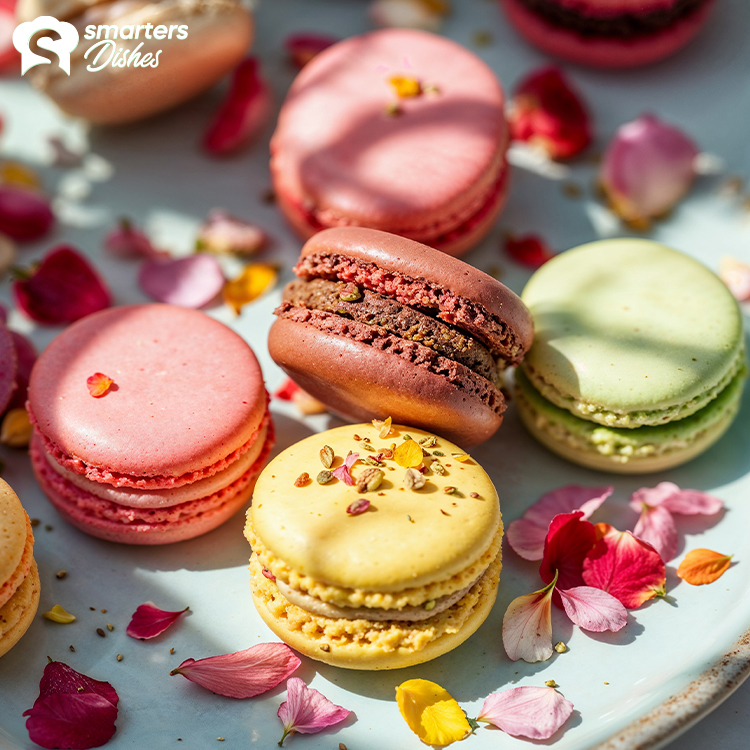
Introduction: The Ultimate Pastry Challenge “In this 1,000-word guide, I, Ella Joy, am taking you through the most feared recipe in the pastry world: The French Macaron. At SmartersDish, we believe that failure in macarons is usually due to a lack of respect for physics. A macaron is a meringue-based cookie that requires precise humidity control and a specific folding technique known as ‘Macaronage’. Let’s break down why your shells crack and how to achieve those perfect ‘feet’ (les pieds).”
The Meringue Foundation: Italian vs. French “We advocate for the Italian Method at SmartersDish. By whisking a hot sugar syrup (118°C) into the egg whites, we create a ‘cooked’ meringue that is far more stable than the French cold-whisk method. This stability is what allows the macaron to hold its shape in the oven. The science lies in the sugar’s ability to coat the protein strands, preventing them from collapsing under the weight of the almond flour.”
The Art of Macaronage “Macaronage is the process of deflating the batter just enough. You aren’t just mixing; you are removing air. You must fold the batter until it reaches the ‘Lava Stage’—where it flows off the spatula in a continuous ribbon and disappears back into the bowl after 10 seconds. If you under-mix, the shells will crack. If you over-mix, they will spread into flat pancakes. It is a game of seconds.”