
Science of the Tagine: Slow-Cooking and the Geometry of Steam

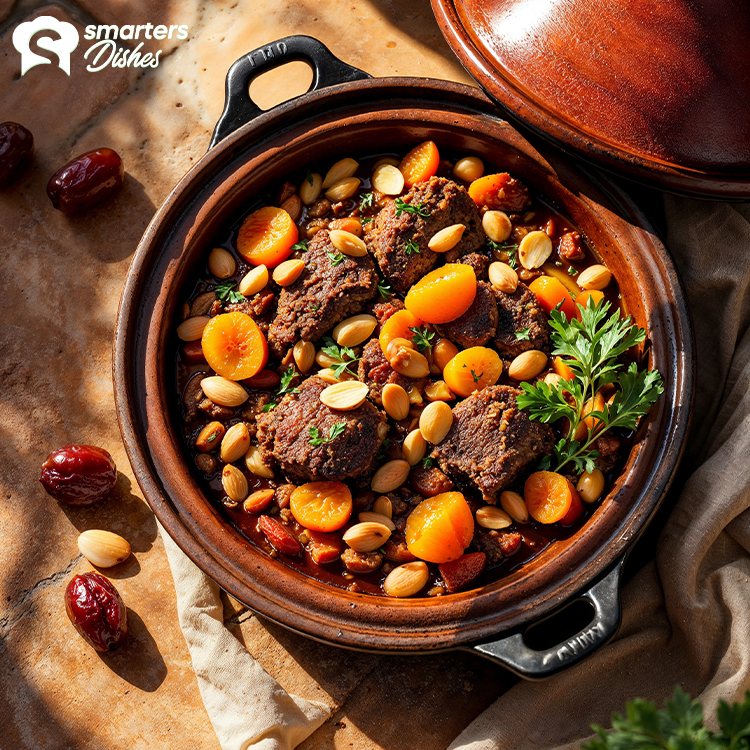
Introduction: A Culinary Expedition to the Maghreb “In this 950-word exploration, we travel to Morocco. The Tagine is both a vessel and a dish, and its design is a marvel of ancient engineering. At SmartersDish, I use the Tagine to demonstrate the power of ‘Low and Slow’ cooking. Whether it’s Lamb with Prunes or Lemon Chicken, the secret lies in the conical lid, which allows for a unique condensation cycle that self-bastes the meat for hours.”
Thermal Dynamics of the Clay Pot “The base of a tagine acts as a heat reservoir, while the tall, conical top remains cooler. As the liquid at the bottom boils, the steam rises, hits the cool walls of the cone, condenses, and trickles back down onto the meat. This constant cycle ensures that even the toughest cuts of lamb become ‘butter-tender’ without ever drying out. We call this ‘The Infinite Baste’.”
Layering Flavors: The Ras el Hanout “Moroccan cuisine is built on layers. We start with the ‘Soffritto’ of onions and cilantro, followed by the complex ‘Ras el Hanout’—a spice blend that can contain up to 30 ingredients. We balance the savory with the sweet (dried fruits) and the acidic (preserved lemons). This creates a ‘Flavor Triangle’ that satisfies every palate. For a full list of my spice-blending secrets, check out the ‘Global Spice’ guide in the SmartersDish shop.”